- Playing soccer
- Cycling
- Reading
- Wine tasting
- Cooking


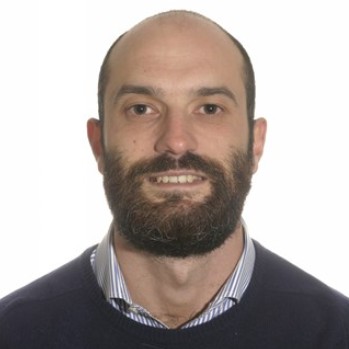
Bernardo Petracchi
Prato
Profilo professionale
Electronic engineer with experience in High Performance Computing (HPC) technologies, including GPUs, FPGAs, and multiprocessor systems, applied to Human Sensible Applications. Research activities focus on the development and optimization of artificial intelligence algorithms for medical image classification and large-scale data processing. Strong proficiency in Python and major AI frameworks, combined with a collaborative mindset, methodological rigor, and close attention to details.
Panoramica
9
9
years of professional experience
Esperienza lavorativa
Engineer (FPGA for real-time video elaboration)
Leonardo SpA
Firenze
2025.05 - ad oggi
Firmware development of AMD Zynq Ultrascale + MPSoC platforms for real-time video processing and monitoring applied to the avionics and naval fields. This activity employs both the Processing System (PS) and the Programmable Logic (PL) parts of the Zynq platform. The former includes the multi-core ARM processors Cortex-A53 and Cortex-R5 and aims at configuring the video modules and executing software pre-processing and non-critical algorithms. The PL is the programmable hardware, that is, the FPGA integrated on the chip that elaborates the video frames in real-time and accelerates heavy computations. Among the several tasks, this activity has to ensure a high quality of the acquired scene by means of algorithms such as Bad Pixel Replacement, Non-Uniformity Correction and Localized Adaptive Contrast Enhancement. The data exchange between the PS and PL is handled through the AXI protocol. The sequential part of the application is developed in C language using the AMD Vitis software platform, while the parts to be accelerated are executed on FPGA using VHDL and the AMD Vivado Design Suite.
Engineer (natural language processing models for textual data extraction and management)
Vesenda S.r.l.
Pavia
2024.03 - 2024.10
In this activity, a Python application was developed to automatically extract and manage information contained in various types of documents, including PDFs and images. Optical Character Recognition technologies and several Natural Language Processing models were used for this task, including Small Language Models (SLMs) like Phi-3 Mini and Large Language Models (LLMs) like Mistral 7B. These models take as input the documents to be analyzed along with a prompt — an instruction that tells the model which information to extract and how to present it. In particular, the models were applied to a set of 55 invoices in PDF format and a set of 69 delivery notes in JPEG format. For the first group, the models were asked to extract the following six fields: invoice number, invoice date, due date, amount without VAT, amount with VAT, and total amount. The best-performing model (Mistral 7B) achieved an average accuracy (across the 55 documents) of 4.3 out of 6 fields. For the second group, the Mistral 7B model was used to extract the supplier’s name from each document. Given the substantial computational resources required by this LLM, the University of Pavia’s multi-GPU cluster was utilized and controlled remotely thorugh the Bitvise SSH Client. The accuracy obtained in this case was 97%.
Engineer (ultrasound systems for railway monitoring)
Comesa S.r.l.
Prato
2021.11 - 2021.12
The goal of the project was to develop an innovative system for the continuous, real-time monitoring of railway conditions based on ultrasound technology, aimed at preventing failures and accidents caused by rail deterioration. The ultrasound system was designed to detect microcracks, deformations, and other defects in the tracks. The idea behind the project was to place several ultrasound transducers, spaced a few hundred meters apart, near the rails. These transducers act as both transmitters and receivers, and the data they collect are sent to the cloud, where they are processed and analyzed using artificial intelligence algorithms to identify patterns and anomalies that would be difficult to detect manually. The use of AI makes it possible to distinguish between actual defects and non-critical variations (such as environmental changes). One of the project requirements was to achieve the highest level of reliability, namely SIL (Safety Integrity Level) 4. During this activity, the front-end electronics for the transmission and reception stages of the ultrasound signals were designed. Specifically, several models of piezoelectric transducers were analyzed to determine which were most suitable for this application. For this purpose, a signal generator was used to produce signals with frequencies above 20 kHz to drive the different piezoelectric transducers under test. This made it possible to understand how the various types of transducers responded to electrical excitation. Signal generation using the generator was accompanied by the use of an oscilloscope to visualize the waveform on the display and verify that the generated signal matched the desired one in terms of both voltage and frequency.
High-School Tutor (mathematics, physics, computer science, and electronics)
2016.01 - 2021.12
Grape Harvester
Piandaccoli Farm
Florence
2016.01 - 2016.12
Istruzione
Dottorato di Ricerca (PhD) - Bioengineering, Bioinformatics, and Health Technologies
University of Pavia
2025-07
Laurea Magistrale (MS) - Electronic Engineering
University of Florence
2021-10
Laurea (BS) - Electronic and Telecommunications Engineering
University of Florence
2018-03
Competenze
- MATLAB
- Simulink
- Intel Quartus Prime
- VHDL
- Vivado Design Suite
- Vitis
- C
- Cuda C
- Open MP
- Visual Studio
- Python
- Pytorch
- Anaconda
- LabVIEW
- Java
- Arduino
- Communication Skills
- Attention to Detail
- Flexible and Adaptive
- Time-Management Skills and Punctuality
- Teamwork Skills
Siti web
Hobby e interessi
Costume Section
- Acceleration of Hyperspectral Skin Cancer Image Classification through Parallel Machine-Learning Methods, Petracchi, B.; Torti, E.; Marenzi, E.; Leporati, F., Sensors, 2024
- Machine Learning-Based Classification of Skin Cancer Hyperspectral Images, Petracchi, B.; Gazzoni, M.; Torti, E.; Marenzi, E.; Leporati, F., Proceedings of the 27th International Conference on Knowledge-Based and Intelligent Information & Engineering Systems, Athens, 2023-09-01, pp. 1-11
Languages
Italiano
Madrelingua
Inglese
Intermedio avanzato
B2
Cronologia
Engineer (FPGA for real-time video elaboration)
Leonardo SpA
2025.05 - ad oggi
Engineer (natural language processing models for textual data extraction and management)
Vesenda S.r.l.
2024.03 - 2024.10
Engineer (ultrasound systems for railway monitoring)
Comesa S.r.l.
2021.11 - 2021.12
High-School Tutor (mathematics, physics, computer science, and electronics)
2016.01 - 2021.12
Grape Harvester
Piandaccoli Farm
2016.01 - 2016.12
Dottorato di Ricerca (PhD) - Bioengineering, Bioinformatics, and Health Technologies
University of Pavia
Laurea Magistrale (MS) - Electronic Engineering
University of Florence
Laurea (BS) - Electronic and Telecommunications Engineering
University of Florence