

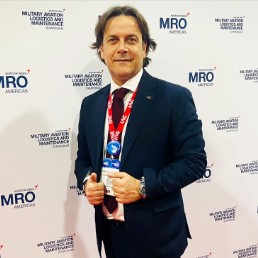
Stefano Speziale
Monte Porzio Catone
Panoramica
2
2
Languages
2027
2027
years of professional experience
Esperienza lavorativa
SUPPLY CHAIN AND LOGISTIC MANAGER
QUICKTURN EUROPE
ROMA
2025.06 - Current
A JOINTVENTURE between IAG ECE and FTAI Aviation.
Material Requirements Planning (MRP): aligns the procurement of new or repaired parts with the shop visit schedule;
Vendor Management: selects and monitors OEM-certified suppliers to ensure aerospace quality standards;
Turn-Around Time (TAT) reduction prevents delays in returning engines to airlines by minimizing part wait times (stockouts);
Inbound and outbound logistics: organize secure, tracked transport of complete engines or complex modules to and from the workshop;
Core management controls the return flow of worn or overhaul-ready components (core return management) to process exchange credits or warranty claims;
Warehouse control (bonded stores): overseas the secure storage of aeronautical materials, separating ready-to-use parts from those awaiting inspection;
Full traceability: ensures that every single component installed on the engine has compliant airworthiness documentation (e.g., EASA Form 1 or FAA 8130-3 forms);
Audits and safety standards collaborates with the quality department to comply with international civil aviation regulations during all warehouse handling operations.
SUPPLY CHAIN AND LOGISTIC MANAGER
IAG ENGINE CENTER EUROPE
ROMA
1 1 - 2025.06
Project Manager Cfm56 / CF6
ALITALIA MAINTENANCE SYSTEMS
ROMA
1 1 - 2016.11
Project Management and Planning – Scope of Work Definition: Analyzes client requirements and historical engine data to define the initial work plan;
TAT (Turnaround Time) Planning: Establishes a detailed timeline for engine disassembly, inspection, repair, and reassembly;
Progress Monitoring: Oversees daily workshop operations to identify and resolve operational bottlenecks;
Financial and Commercial Control – Project Budget Management: Monitors labor and material costs to ensure project profitability;
Issuance of Supplementary Quotes: Prepares and presents additional costs (supplementary quotes) to the client based on component inspection findings;
Final Invoicing: Oversees project financial closure and the preparation of documentation for client invoicing;
Internal/External Communication and Coordination – Single Point of Contact for the Client: Manages daily communications, sends progress reports, and hosts client representatives at the facility;
Internal Department Alignment: Coordinates work in engineering, the workshop (production floor), logistics, quality control, and purchasing (buyers). Technical Documentation Release: Ensures the engine is delivered with the appropriate return-to-service certificate (EASA Form 1 or FAA 8130-3).
Material Management Project Manager Cfm 56 / CF6 5
ALITALIA MAINTENANCE SYSTEMS
ROMA
1 1 - 2007.01
Parts Repair MNG with Vendors (25+ vendors);
Piece Parts Contract negotiation;
Vendors invoices approval;
Vendors Performance analysis;
Commercial Terms / Technical Agreement specification development;
Participation in a vendor quality audit.
Subcontract & Buyer specialist
ALITALIA AIRLINES
ROMA
1 1 - 2003.03
Supplier management: Selects and qualifies external subcontractors for complex repairs (e.g., heat treatments, specialized welding, or the overhaul of specific modules);
Turnaround time (TAT) control: Monitors delivery schedules to prevent workflow delays in the workshop and minimize engine downtime;
Compliance and quality: Ensures that all outsourced work meets regulatory aviation standards (e.g., EASA Part-145) and airworthiness requirements;
Negotiation and contracts: Defines commercial terms, costs, and service level agreements (SLAs) for subcontracting contracts;
Selection and qualification: scouting and evaluation of certified suppliers (holding EASA/FAA approvals or equivalent);
Commercial negotiation: defining prices, volume discounts, payment terms, and delivery lead times to reduce operating costs;
Exchange contract management: managing exchange programs (core returns, pool access) for high-cost components.
Engine Material kitting and configuration control
ALITALIA AIRLINES
ROMA
1 1 - 2001.03
Responsible for configuring the module/engine assembly in accordance with the engine manual during reassembly;
To process correctly the material disposition in compliance with the engine contracts;
To check Service Bulletin & AD to perform.
Istruzione
DIPLOMA - ISTITUO TECNICO INDUSTRIALE
ENRICO FERMI
FRASCATI (RM) 1991 - 1995
Language skills
Italiano
Lingua madre
Inglese
Avanzato
C1
Cronologia
SUPPLY CHAIN AND LOGISTIC MANAGER
QUICKTURN EUROPE
2025.06 - Current
DIPLOMA - ISTITUO TECNICO INDUSTRIALE
ENRICO FERMI
1991 - 1995
SUPPLY CHAIN AND LOGISTIC MANAGER
IAG ENGINE CENTER EUROPE
1 1 - 2025.06
Project Manager Cfm56 / CF6
ALITALIA MAINTENANCE SYSTEMS
1 1 - 2016.11
Material Management Project Manager Cfm 56 / CF6 5
ALITALIA MAINTENANCE SYSTEMS
1 1 - 2007.01
Subcontract & Buyer specialist
ALITALIA AIRLINES
1 1 - 2003.03
Engine Material kitting and configuration control
ALITALIA AIRLINES
1 1 - 2001.03